

Table of Contents
- Why Sensitive Stomachs Need a Different Kind of Treat
- How We Chose These Treats for Sensitive Stomachs
- Quick Comparison: Best Natural Treats for Sensitive Stomachs
- 1. Turkey Chips: The Low-Allergen Novel Protein Pick
- 2. Beef Chips: Lean, Iron-Rich, and Easy to Digest
- 3. Chicken Chips: The Everyday Single-Ingredient Standby
- 4. Freeze-Dried Raw Trail Snacks: Rotation Options for Picky Eaters
- 5. Puppy Packs 'n Snacks: A Starter Bundle for Young Digestion
- Matching Treats to Specific Dietary Needs
- How to Introduce a New Treat Safely
- What Matters Most
- Frequently Asked Questions
Last Updated: October 21, 2026
Why Sensitive Stomachs Need a Different Kind of Treat
A dog with a sensitive stomach is not a picky eater, its digestive system reacts to something in the bowl, and the treat bag is the most common hidden trigger. Loose stools, gas, and midnight gurgling often trace back to a biscuit with fifteen ingredients or an unfamiliar protein.
At Fynnley + Meadow, we built our treat selection around a simple idea: if you cannot read the ingredient list out loud in one breath, it does not belong in a sensitive dog's diet. The FDA's guidance on pet food labels and ingredient statements makes the same point from a regulatory angle, which is that clear labeling is the foundation of safe feeding decisions.
That is why the best natural treats for sensitive stomachs share three traits: one ingredient, a novel or lean protein, and a gentle preservation method. Everything else is marketing.
How We Chose These Treats for Sensitive Stomachs
Our criteria were deliberately narrow: single-ingredient treats, limited ingredient treats with nothing hidden under "natural flavors," and easy-to-digest proteins.
We also weighed calories per piece, whether the treat breaks cleanly for training, and how the protein source is described.
The AAHA's nutritional assessment guidelines for dogs recommend evaluating every food and treat as part of a complete dietary history, which is exactly how we approached this list.
Quick Comparison: Best Natural Treats for Sensitive Stomachs
| Pick | Protein | Format | Price | Best For |
|---|---|---|---|---|
| Turkey Chips Snack Packs | Turkey | Dehydrated chip | $10.95 | Chicken-allergic dogs, training |
| Beef Chips | Beef | Dehydrated chip | $16.95 | Iron-rich everyday reward |
| Chicken Chips | Chicken | Dehydrated chip | $13.95 | Dogs with no poultry issues |
| Freeze-Dried Trail Snacks | Chicken, beef, turkey, duck, pork | Freeze-dried raw | $15.99 | Picky eaters, protein rotation |
| Puppy Packs 'n Snacks | Multi-protein | Dehydrated chip bundle | $19.95 | Puppies, flavor sampling |
1. Turkey Chips: The Low-Allergen Novel Protein Pick
Turkey is our first recommendation because it is a novel protein for many dogs, less immune exposure means reactions are less likely.

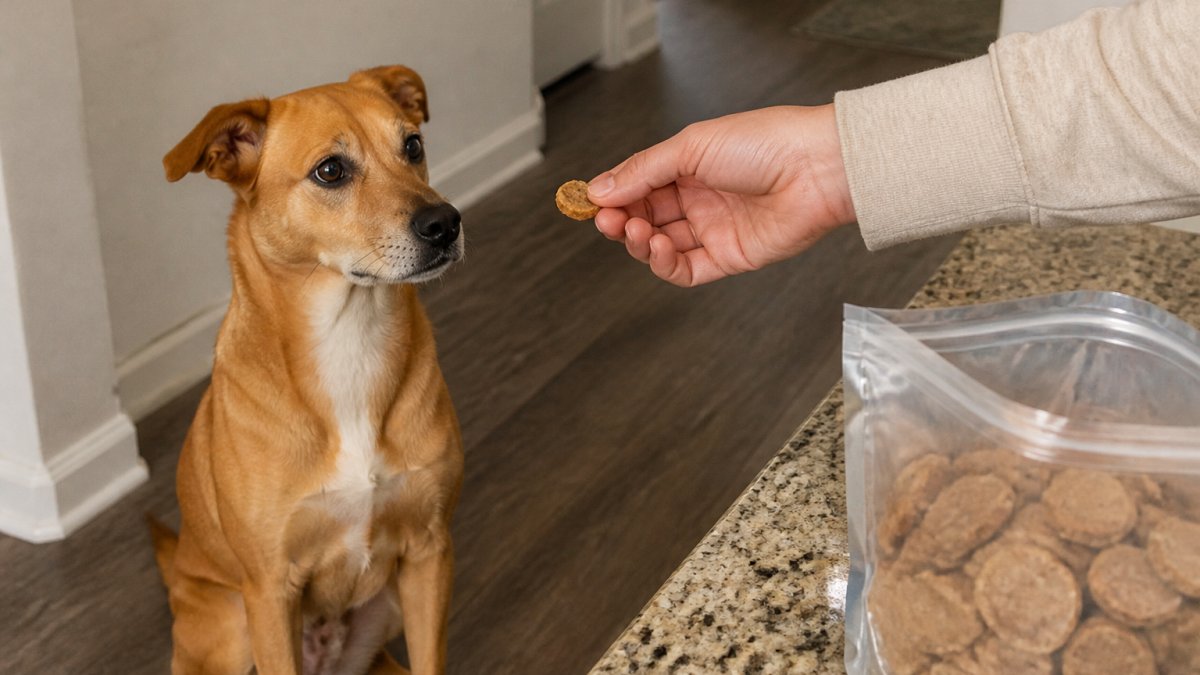
Each chip runs about 7 calories: small dogs get 2-4 a day, medium dogs 5-7, large dogs up to 10.
The honest limitation: turkey is lean to the point of being dry, and some dogs turn their nose up at the first piece.
2. Beef Chips: Lean, Iron-Rich, and Easy to Digest
Beef Chips suit dogs who need a heartier reward without the fat load. Farm to Pet uses table-grade beef round, one of the leanest cuts, dehydrated into a crunchy chip at $16.95.

Where it falls short: beef is a more common allergen than turkey. If your dog has reacted to beef before, skip this one and start with turkey instead.
3. Chicken Chips: The Everyday Single-Ingredient Standby
Chicken is the most familiar protein in most dogs' diets, which cuts both ways. For dogs with no poultry sensitivity, Farm to Pet Chicken Chips at $13.95 are the simplest everyday treat here: 100% chicken breast, no fillers, roughly 7 calories per chip.
For dogs who do react to chicken, this is the wrong pick. That is not a flaw in the product, it is a signal to move to turkey or a freeze-dried alternative.
4. Freeze-Dried Raw Trail Snacks: Rotation Options for Picky Eaters
Freeze-drying preserves nutrients and aroma, which is why picky dogs often accept these when they refuse everything else. Trail Snacks covers chicken breast, beef heart, turkey heart, duck, and pork tenderloin at $15.99 for a 3-ounce bag.
Rotation matters for sensitive stomachs: feeding the same protein daily can gradually sensitize a dog, so cycling between duck, turkey, and pork spreads exposure.
The tradeoff is texture. Freeze-dried pieces crumble, so they are messier in a pocket than a dehydrated chip. Keep a small container handy rather than loose in a training pouch.
5. Puppy Packs 'n Snacks: A Starter Bundle for Young Digestion
Puppies have developing digestive tracts, which is why bland, single-ingredient treats make sense early. The Puppy Packs 'n Snacks bundle at $19.95 combines beef, turkey, fish, and chicken chips so you can sample every flavor without committing to a full bag.

It doubles as a diagnostic tool: feed one protein at a time, note the response, and you will quickly learn which proteins your puppy handles well.
The one drawback: it is a starter pack, not a long-term supply. Once you know your puppy's safe proteins, buy the full-size bag of that single flavor.
ASPCA's guidance on introducing new foods to pets
Turkey Chips Snack Pack Bundles | Low Allergen Treats for Training →
Matching Treats to Specific Dietary Needs
The right treat depends on what your dog actually reacts to, not which bag looks healthiest. A dog with a confirmed chicken allergy, one recovering from pancreatitis, and one on a prescription hydrolyzed diet all need different answers. Use the constraints below as a starting point, then confirm with your veterinarian.
Start with the constraint, not the protein
Most treat mistakes happen because owners pick a protein first and then justify it. Work in reverse: identify the hard constraint your dog is under, then choose the treat that fits inside it.
- Confirmed food allergy (diagnosed by your vet, ideally after an elimination trial): Avoid the identified allergen entirely, including trace amounts in multi-protein bundles. A single-ingredient treat is easier to clear because there is only one protein to check. If chicken is the confirmed allergen, turkey is a reasonable next step only if your vet agrees, cross-reactivity between poultry proteins is possible.
- Suspected but unconfirmed sensitivity: Do not guess. Ask your vet about a structured elimination trial using a single novel protein or a prescription hydrolyzed diet, and keep treats out of the trial unless your vet approves the specific treat.
- Pancreatitis or a vet-flagged low-fat diet: Fat restriction is the priority, and many dehydrated meat chips are leaner than baked biscuits but still not automatically appropriate. Ask your vet for a fat ceiling per day, then compare treats on a dry-matter basis rather than guessing from the label's "crude fat" line. High-fat organs and freeze-dried raw options are usually the wrong direction.
The treat allowance math
Most veterinarians suggest keeping treats to roughly 10% of daily calories, with some allowing up to 20% for active dogs. Treat the range as a planning tool, not a prescription.
A 25-pound dog eating about 700 calories a day has a 10% treat budget of roughly 70 calories, about 10 chips at 6-7 calories each, which a single training session can halve.
A quick constraint-to-treat starting point
- Confirmed chicken allergy: Turkey Chips or a freeze-dried duck option, pending vet confirmation on cross-reactivity
- Needs iron or extra protein, no beef sensitivity: Beef Chips
- Picky eater who rejects everything: Freeze-dried Trail Snacks, offered warm
Treats do not diagnose or treat underlying disease. If your dog has recurring vomiting, diarrhea, weight loss, or appetite changes, the treat bag is not the place to solve it, those signs warrant a veterinary visit, and a dietary change should follow a diagnosis, not replace one.
AAHA's nutritional assessment guidelines for dogs
How to Introduce a New Treat Safely
A new treat is a small dietary change, and small changes are exactly where sensitive-stomach dogs get into trouble. A structured introduction is not just about avoiding a reaction, it generates information you can act on: which protein caused it, and how severe the response was.
The one-variable rule
Change one thing at a time. Do not switch food and treats in the same week, and do not introduce two new proteins in the same week. If you change two variables and your dog reacts, you have learned nothing except that something in the bowl or the bag was a problem. The FDA's guidance on pet food labels and ingredient statements is useful here because a clear ingredient statement is what makes a one-variable trial readable in the first place.
A gradual trial plan
- Day 1, one piece, morning. Give a single piece in the morning so you can observe your dog through the day. Do not combine it with a new food, a new chew, or a grooming appointment.
- Days 2-3, hold steady. If there is no change in stool, gas, itching, or appetite, repeat the same small amount. Resist the urge to increase quickly; the point is to confirm tolerance, not to fill the treat jar.
- Days 4-7, build gradually. Increase toward your planned portion over several days. A common pattern is to add one piece per day for small dogs and two for larger dogs, stopping at the portion that fits your treat budget.
- Week 2, full portion, continued observation. By the end of the second week you should have a clear picture. If stool quality, gas, and appetite are stable, the treat is likely a good fit.
Portion sizing that matches the trial
Use the treat allowance math from the previous section. A 25-pound dog on about 700 calories a day has a 10% budget of roughly 70 calories, about 10 chips at 6-7 calories each, during the trial, stay well under that ceiling, since a few pieces a day is enough to learn what you need. A 10-pound dog on about 350 calories a day gets roughly 35 calories, or about 5 chips, and half-pieces stretch a training session without overshooting.
Track symptoms in writing
A mental note is not a log. Record the date, treat and amount, stool quality (1-5 scale), gas, itching, vomiting, and appetite for the length of the trial. If a reaction appears on day 9, the log shows whether it followed the portion increase or something else changed. Bring it to your next vet visit.
When to call the vet instead of waiting
Some signs are not a wait-and-see situation. Call your veterinarian if you see repeated vomiting, bloody or black stool, a dog who stops eating entirely, marked lethargy, or diarrhea lasting beyond a day or two. A single soft stool is worth noting; repeated vomiting is worth a phone call. Treats are not a treatment, and a recurring reaction is a diagnostic question.
If you are unsure whether a protein is the trigger, ask your vet about an elimination trial. A single-ingredient treat makes the trial far easier to read, because there is only one variable to track.
ASPCA's guidance on introducing new foods to pets
What Matters Most
The best natural treats for sensitive stomachs have the shortest ingredient list and the gentlest protein for your individual dog. Single-ingredient chips and freeze-dried raw snacks remove the guesswork that multi-ingredient biscuits create.
Finding the right treat for a sensitive stomach takes trial and error, but not months. Fynnley + Meadow curates single-ingredient, filler-free options, from low-allergen Turkey Chips to freeze-dried raw Trail Snacks, so you can isolate triggers and reward your dog with confidence.
Frequently Asked Questions
What treats can I give my dog with a sensitive stomach?
Start with treats built around one protein and nothing else. Single-ingredient options like turkey, beef, or chicken chips skip the fillers, byproducts, and artificial additives that often trigger digestive upset. Turkey works well as a novel protein for dogs that react to chicken. Keep portions small, break chips into pieces, and introduce any new treat over several days while watching for loose stool or gas. If symptoms persist or worsen, stop the treat and check with your vet before trying something else.
Are single-ingredient dog treats better for dogs with allergies?
They make allergies far easier to track. When a treat contains one ingredient, a reaction points to that ingredient and nothing else, so you can rule it out quickly. Multi-ingredient treats hide potential triggers in fillers, preservatives, and byproducts. Single-ingredient dog treats also tend to be easier to digest because there is less for the gut to process. That said, a dog can still be allergic to a single protein, so rotate proteins and note what happens after each one.
How many treats can I give a dog with a sensitive stomach per day?
A common guideline is keeping treats to roughly 10 percent of daily calories, though many vets allow up to 20 percent for active dogs. The chips in this guide run about 6 to 7 calories each, so a small dog can typically have 2 to 4, a medium dog 5 to 7, and a large dog up to 10 per day. Sensitive stomachs do better with smaller amounts spread across the day than one large serving. Confirm the number with your vet if your dog is on a weight or prescription diet.
Can freeze-dried raw treats help dogs with digestive issues?
Freeze-drying preserves nutrients and aroma while removing moisture, which leaves a light, shelf-stable treat that many dogs find highly motivating. For dogs with sensitive stomachs, the appeal is a short ingredient list and minimal processing. It is not a treatment for a diagnosed condition, though. If your dog has chronic digestive issues, introduce freeze-dried treats one protein at a time and keep a simple log of stool quality. Persistent vomiting, weight loss, or blood in the stool needs a vet visit, not a treat swap.
What ingredients should I avoid in treats for sensitive stomachs?
Read the ingredient list and put the bag down if it includes artificial colors, preservatives like BHA or BHT, byproducts, or vague terms such as meat meal. Wheat, corn, and soy are common fillers that some dogs handle poorly. High-fat treats can trigger loose stool or pancreatitis in prone dogs, so lean proteins are safer. If your dog has a chicken allergy, look for turkey, beef, or fish instead. When in doubt, a shorter list beats a longer one every time.